On the farm
Regenerative Farm Systems
Art on the Farm is a working farm first. These are the food-preservation systems in progress through the season — every harvest feeds the next, and nothing goes to waste. Have a question about a system you see here? Call 425-681-1457.
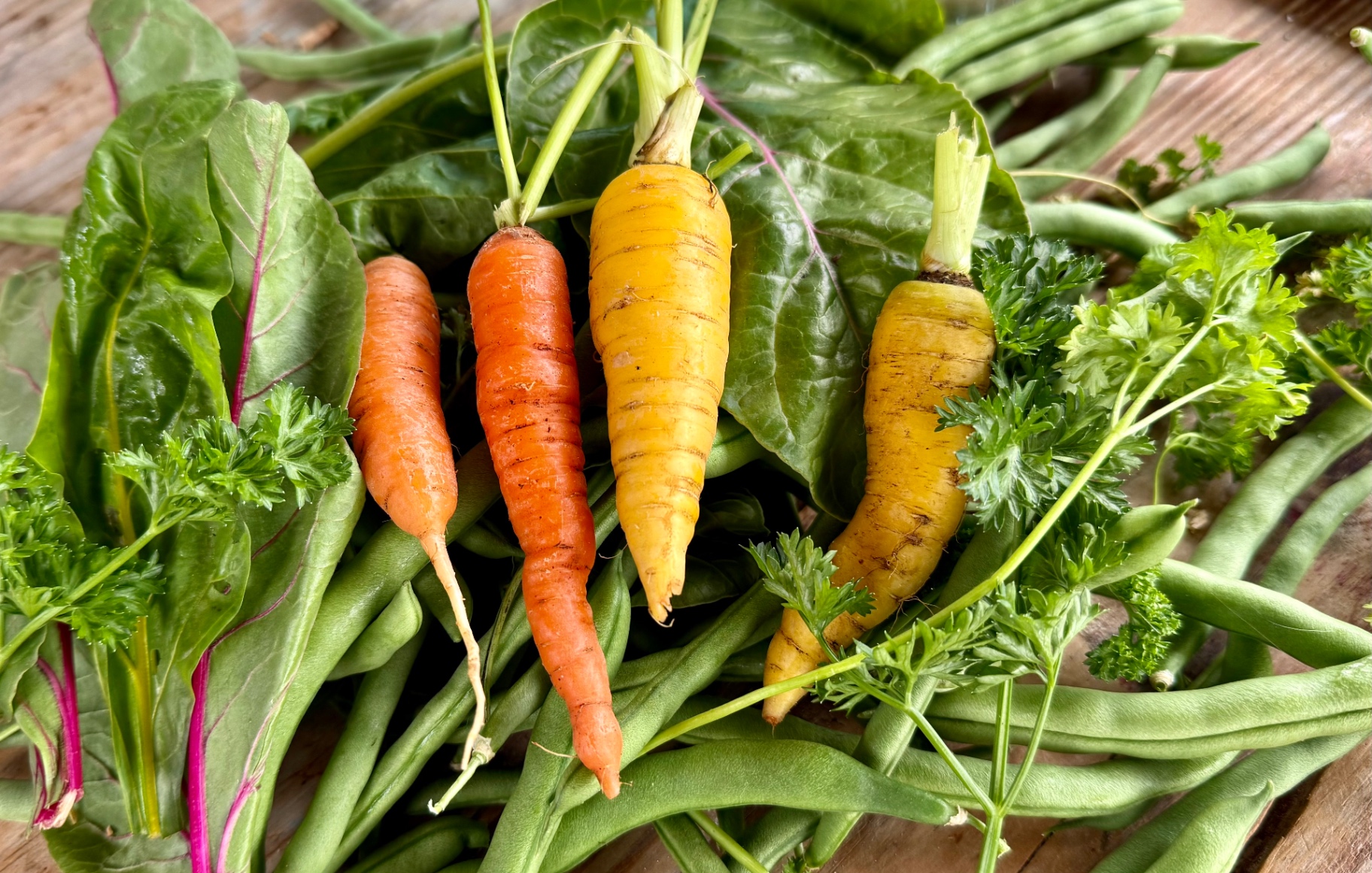
Pulled fresh from the beds
Garden Harvest
Carrots, beans, and chard straight from the garden — the first step in every preservation cycle is growing and gathering good produce right here on the farm.
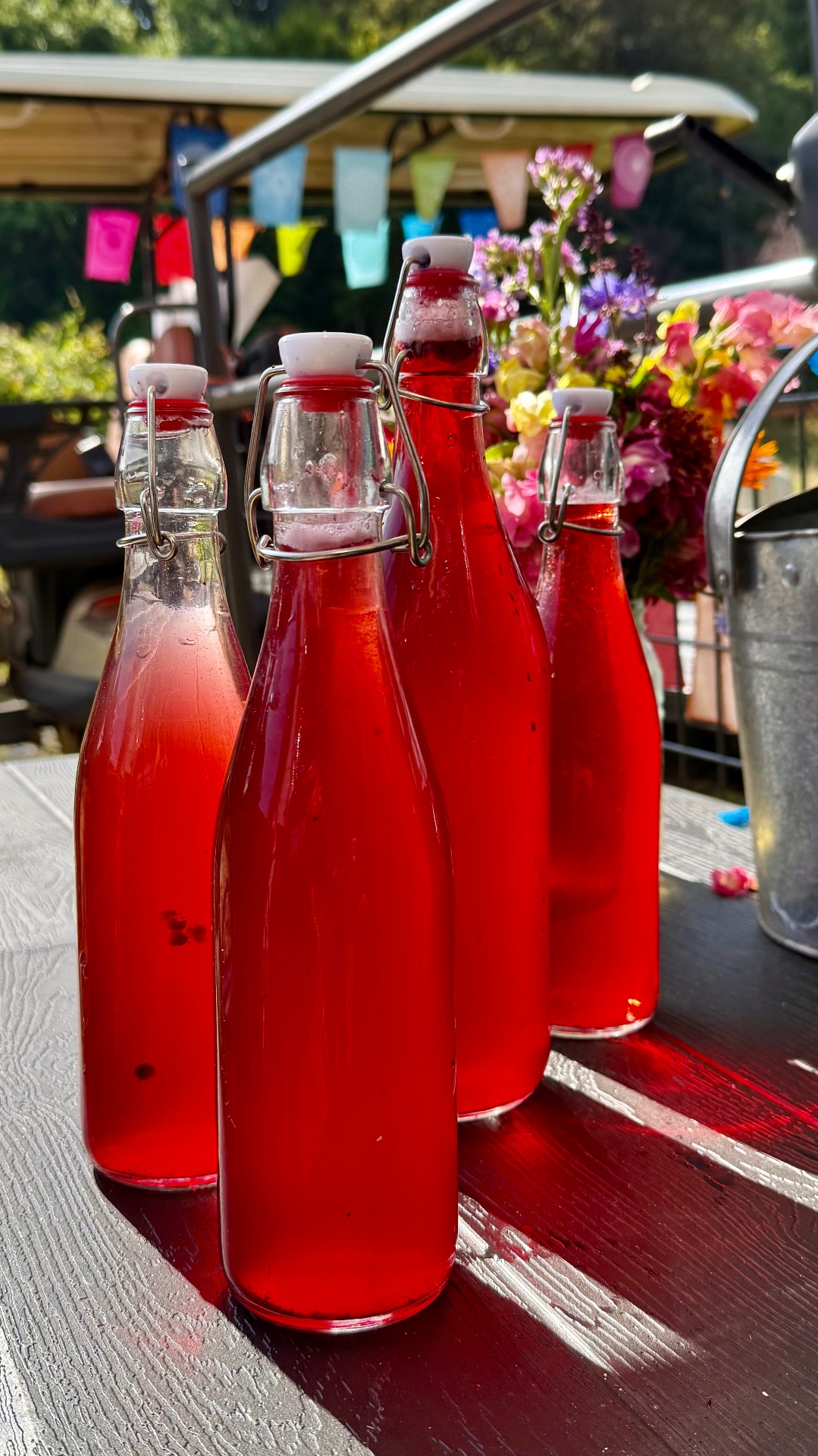
Sealed in swing-top glass
Bottling & Canning
Pressed juices and ferments are bottled in swing-top glass and sealed tight, ready to cellar. Cool, dark storage keeps the flavors of summer well into winter.
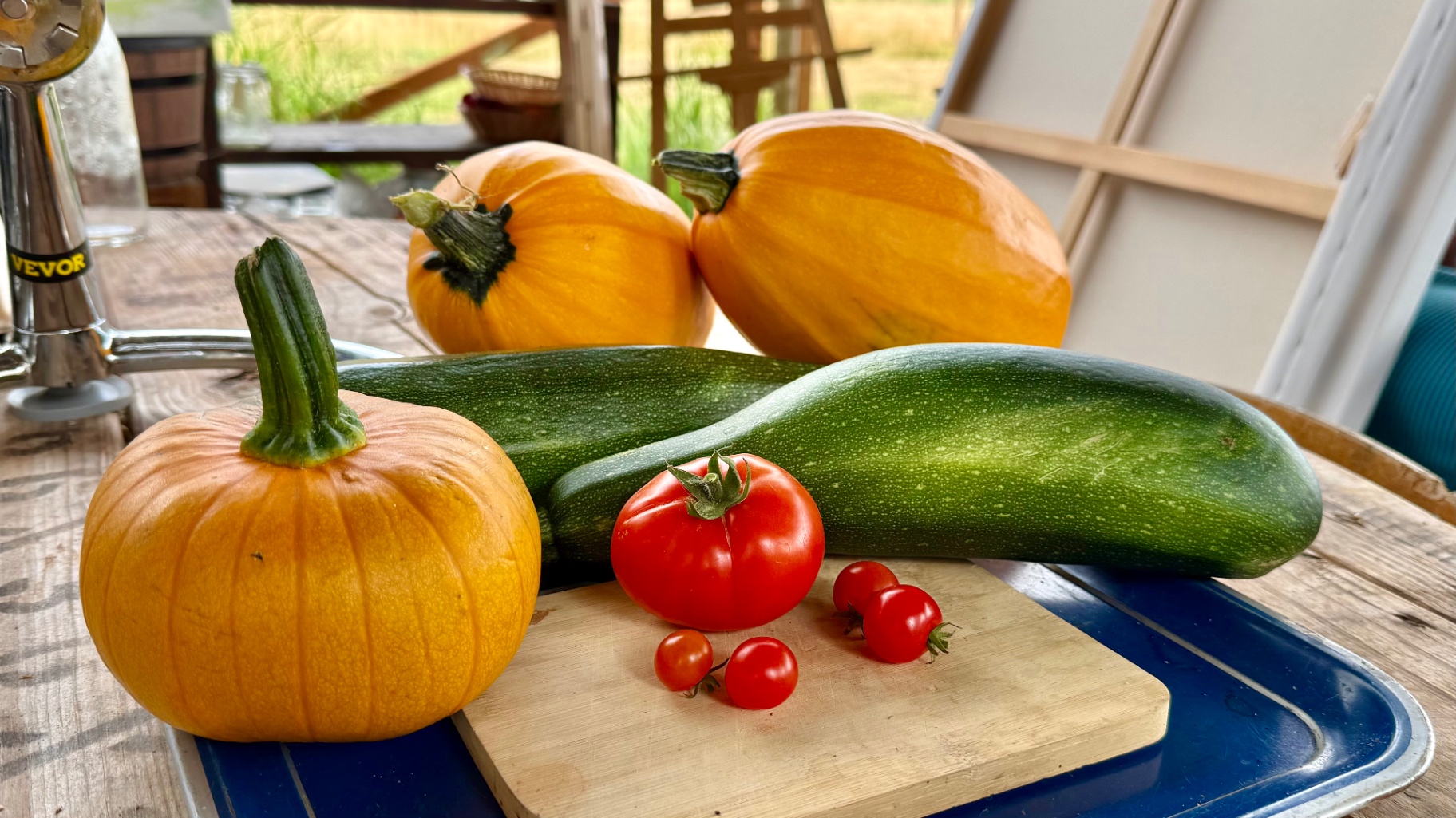
Squash and tomatoes through the press
Cold Pressing
Squash and ripe tomatoes are run through the farm press to extract fresh juice and pulp. Nothing goes to waste — the pressed fiber feeds back to the compost and the animals.
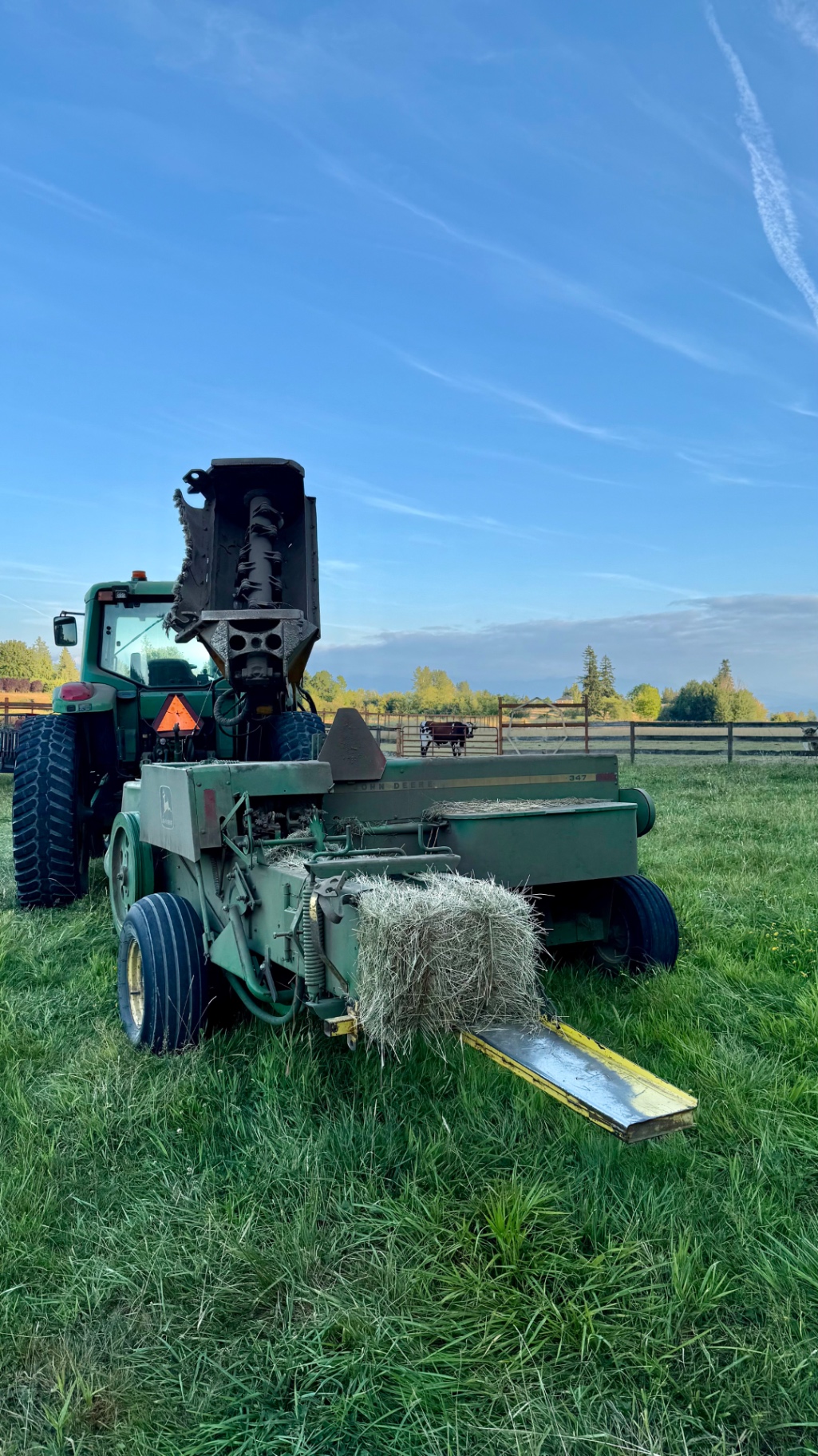
Haying the fields
Forage & Feed
Cutting and baling our own hay keeps the livestock fed through the cold months without buying in feed. It closes a loop on the farm — the fields feed the animals, and the animals feed the fields.
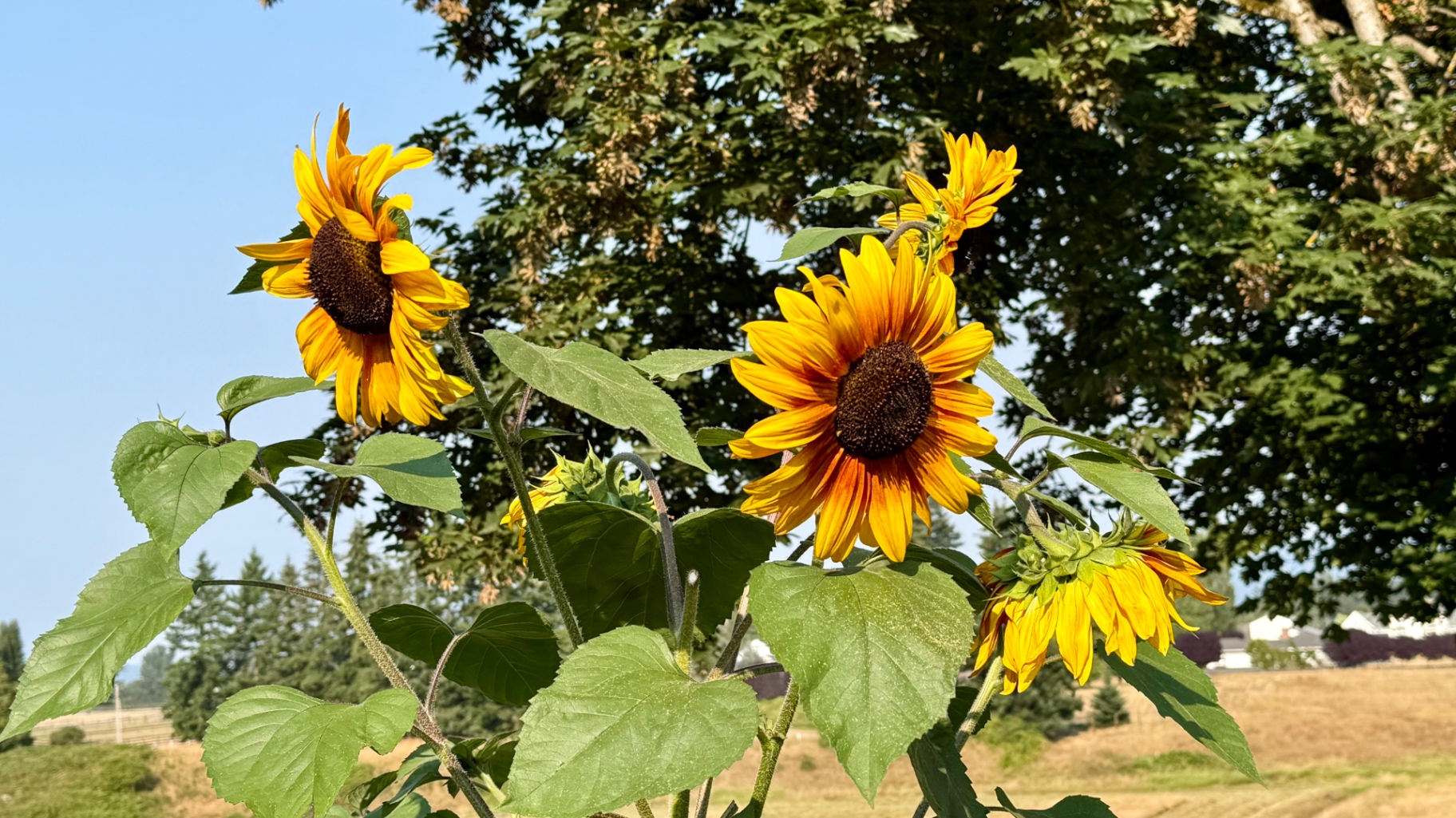
Sunflowers in the field
Seed & Pollinator
Sunflowers are grown for seed, for the pollinators, and for the sheer height of them along the fence line. Saved seed goes back into next year's planting.
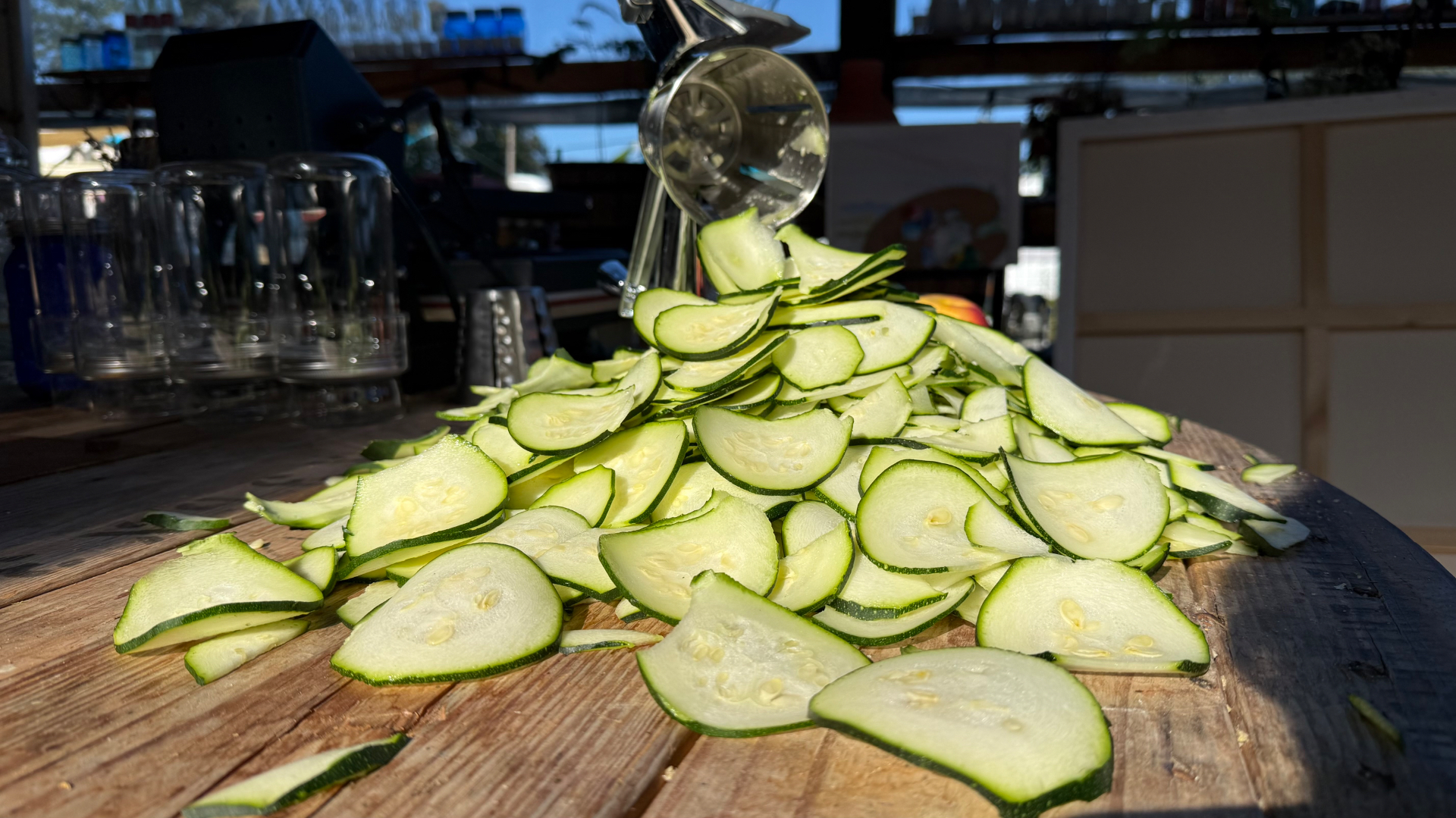
Sliced thin and laid out to dry
Dehydrating
Zucchini sliced into rounds and laid out on the table, ready for the dehydrator. Drying locks in the harvest at its peak with no added energy beyond air and patience.
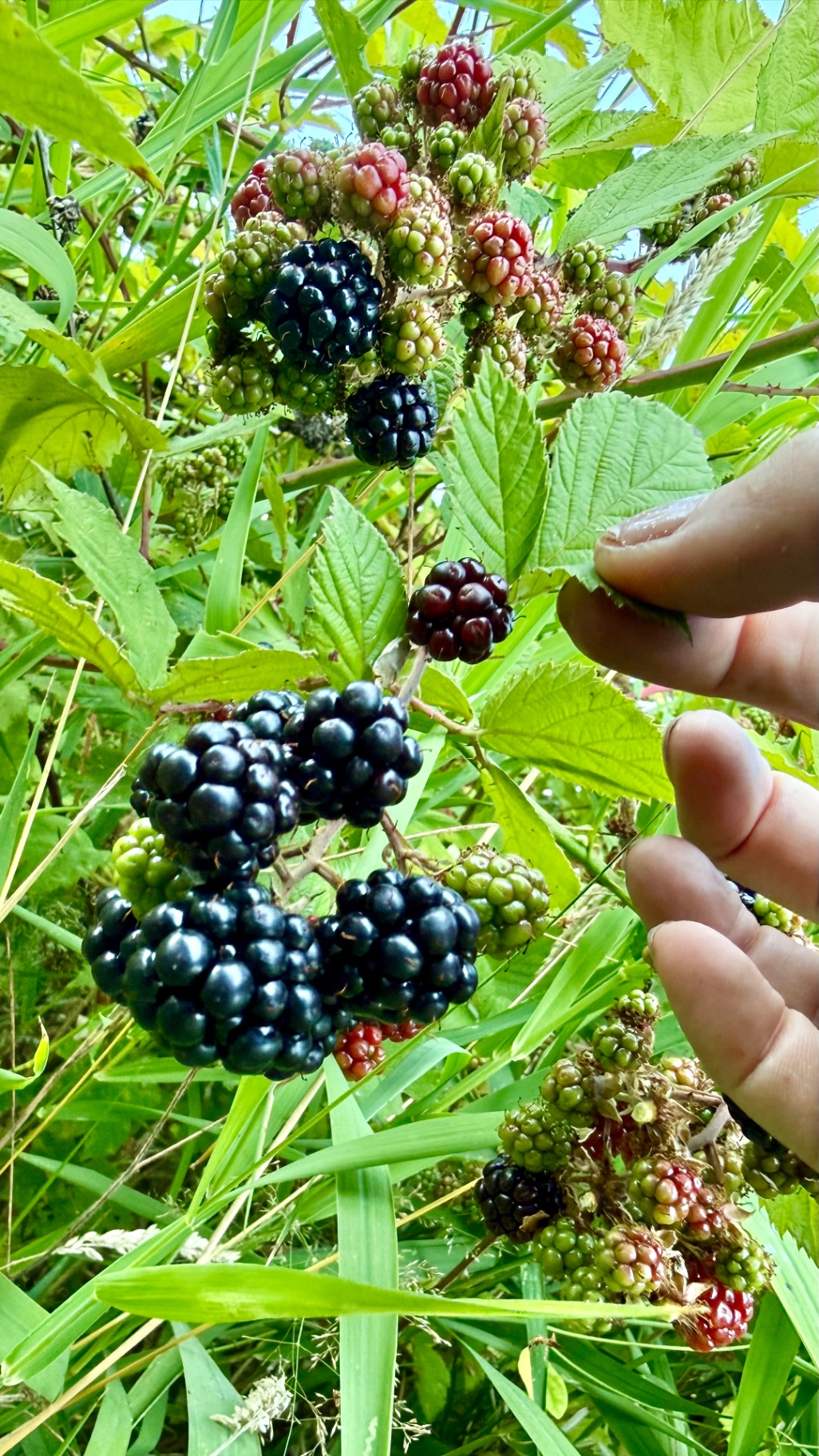
Picked ripe from the canes
Berry Foraging
Blackberries are foraged from the farm's wild canes at peak ripeness — some eaten on the spot, the rest carried back for jam, syrup, and the freezer.
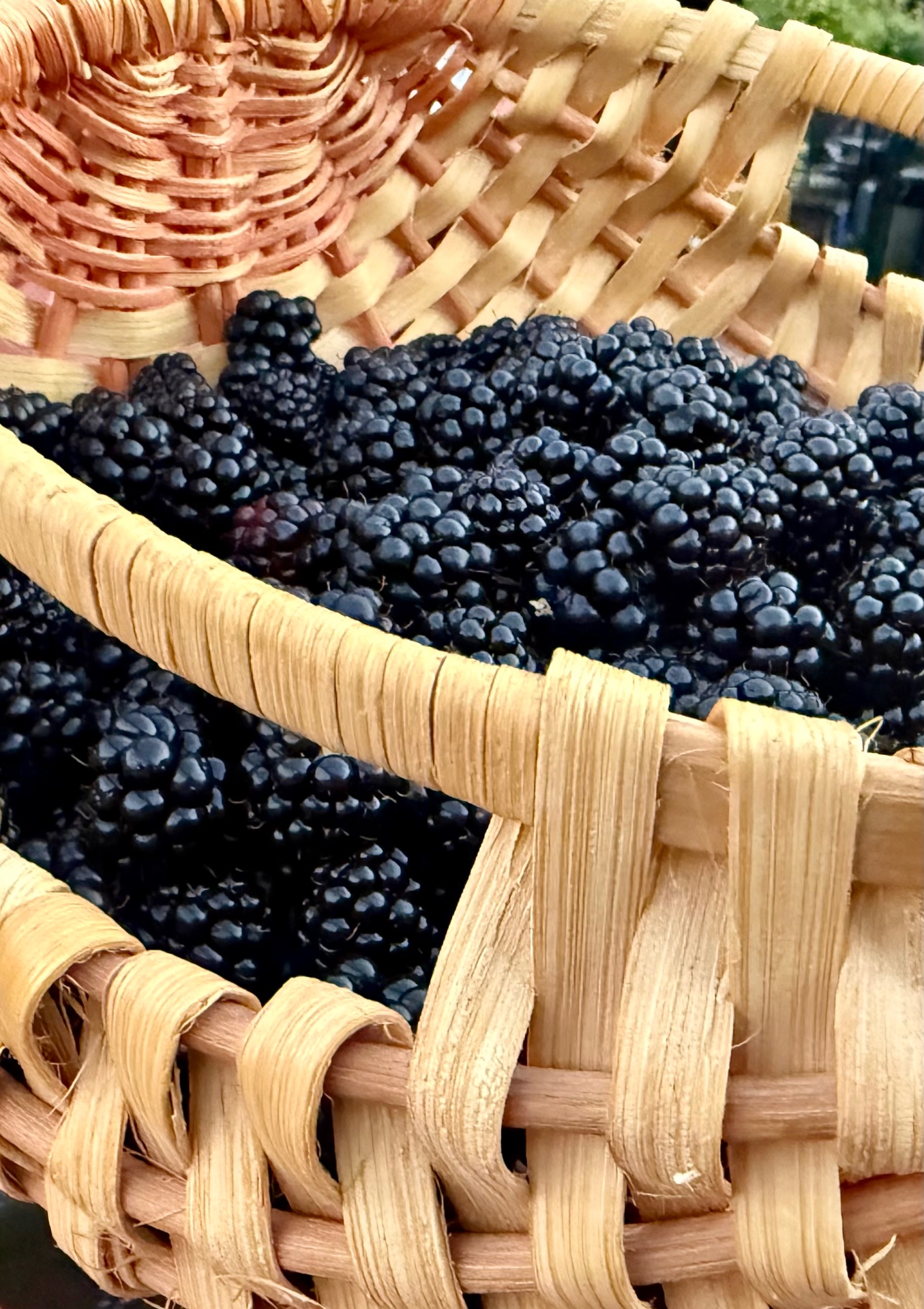
A basket bound for the kitchen
Pantry Fill
A full basket of foraged blackberries headed for the stove. This is what a regenerative system looks like at the end of the day — more food put by than you started with.