Farm Life · September 12, 2026
Pelleting Prairie Grass
After the hay comes off the field, there is still a job left to do. The standing prairie grass that the baler did not take gets mowed down low and left in long rows to dry in the sun for a few days.
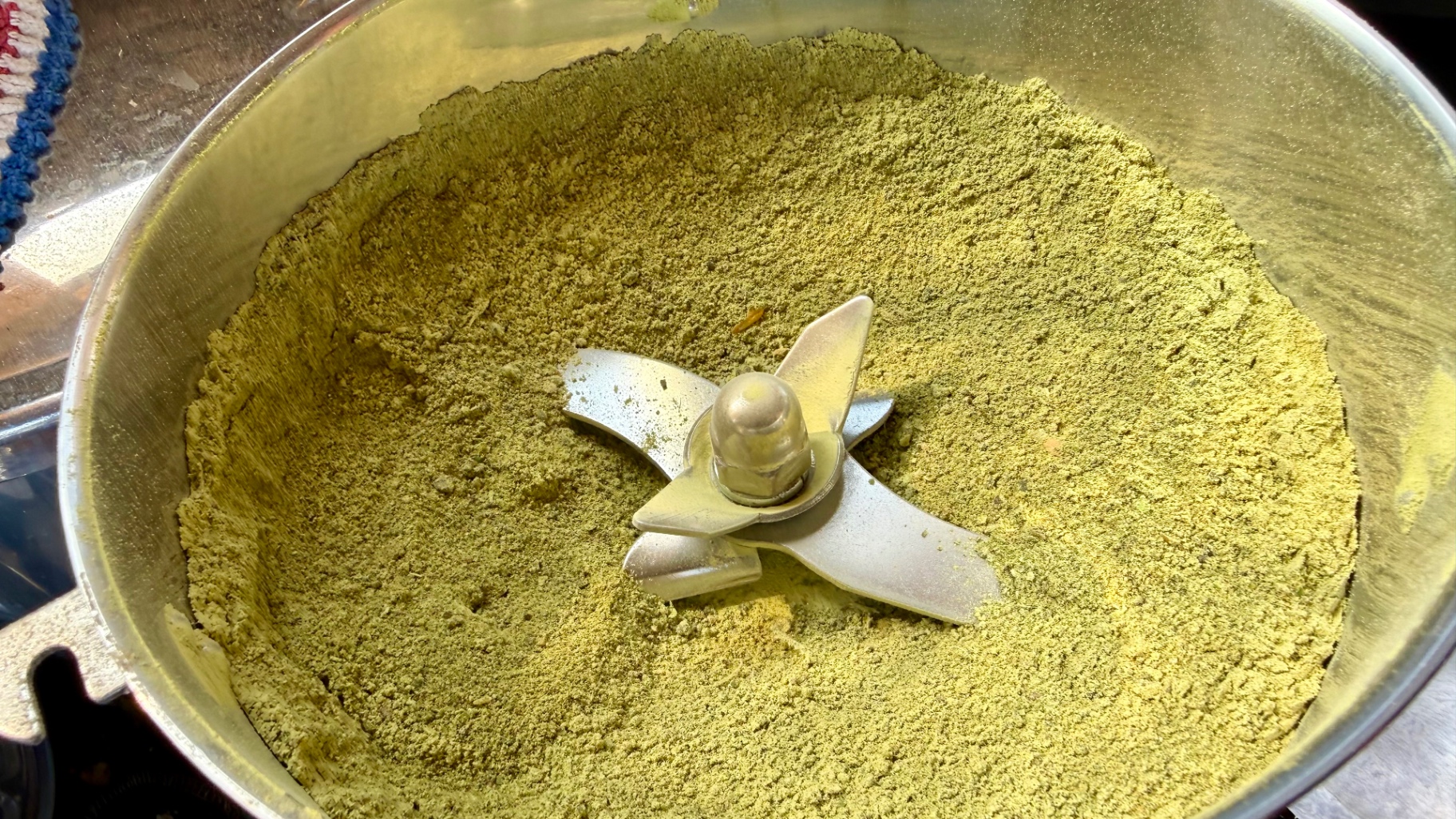
Once it is good and dry, we rake it up and run it through a grinder. That is the first photo below — the grass breaks down into a fine, greenish-yellow powder that smells exactly like a barn in late summer.
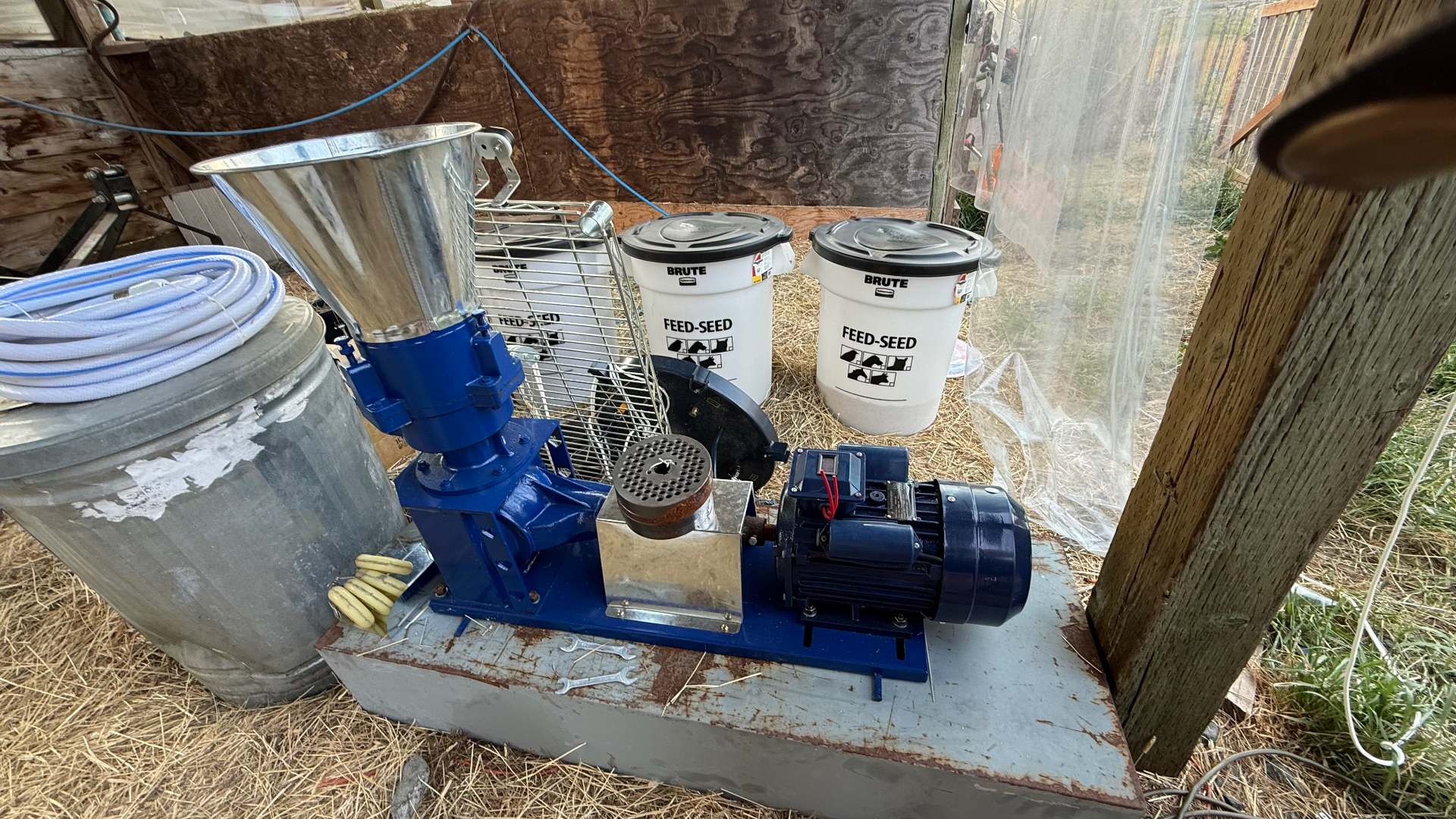
That powder goes into the pellet mill. It feeds down through the hopper, gets pressed hard through the die plate, and comes out the other end as dense little pellets that keep all winter without spoiling. It is slow, dusty, satisfying work, and it means the flock has good feed through the months when the pasture is asleep.
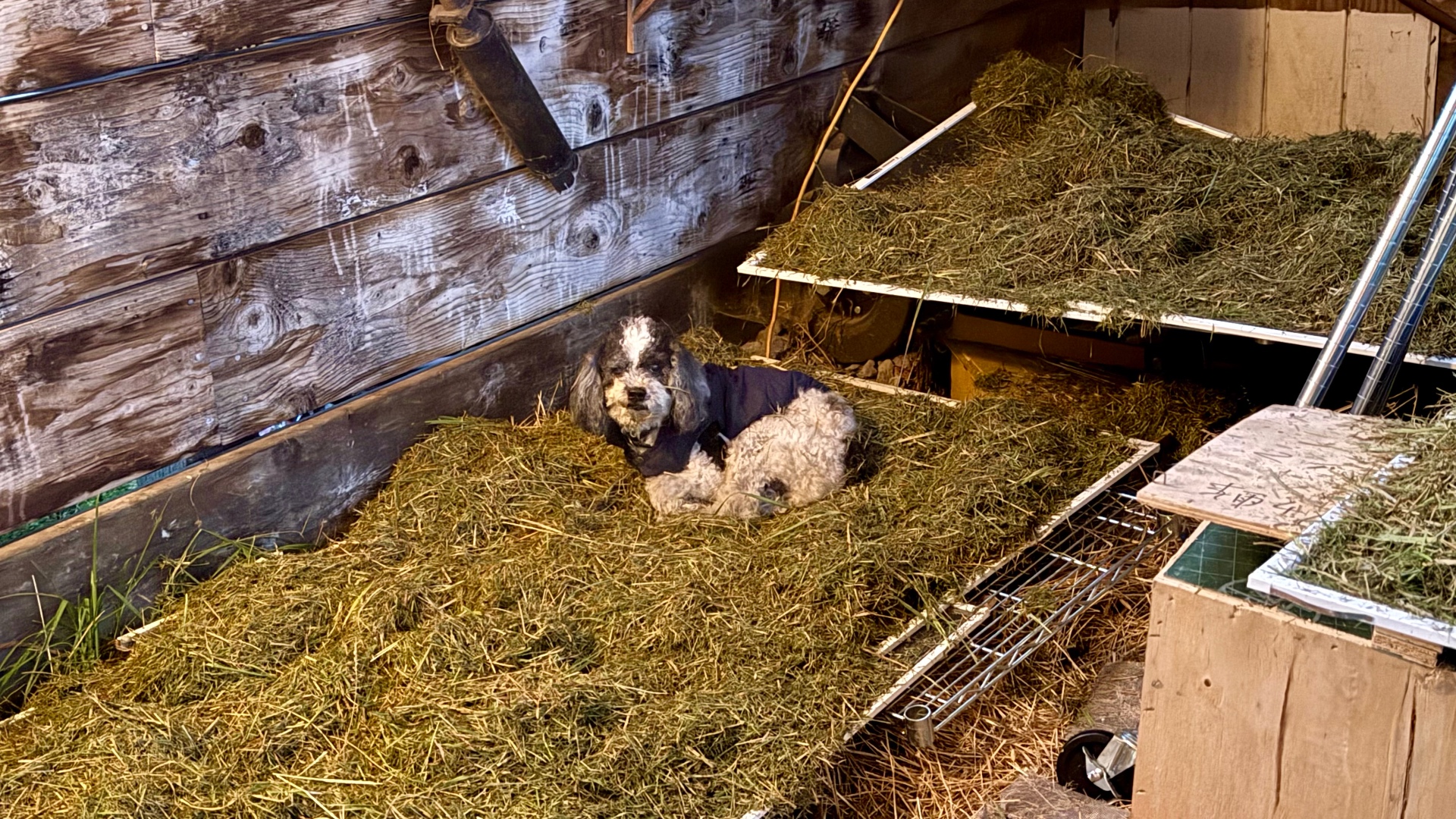
Marley has other ideas about the whole process. Somewhere between drying and grinding, a pile of the loose dried grass ended up on the barn floor, and he has decided it is the finest bed on the property. He curls up in it and watches the mill run, entirely unbothered by the noise and the dust, and has to be politely removed before we can grind the next batch.
So that is where the prairie grass goes — most of it into pellets for the winter, and a small, unauthorized portion into Marley's new bedroom.